Into the Great Wide Open, or, Road-trippin' in South Dakota

There is a place in the United States of America where if you happen to glance out your window as you drive past on the highway, you might see a metal sculpture of a skeletal man leading an equally skeletal T-Rex toward a small western town.

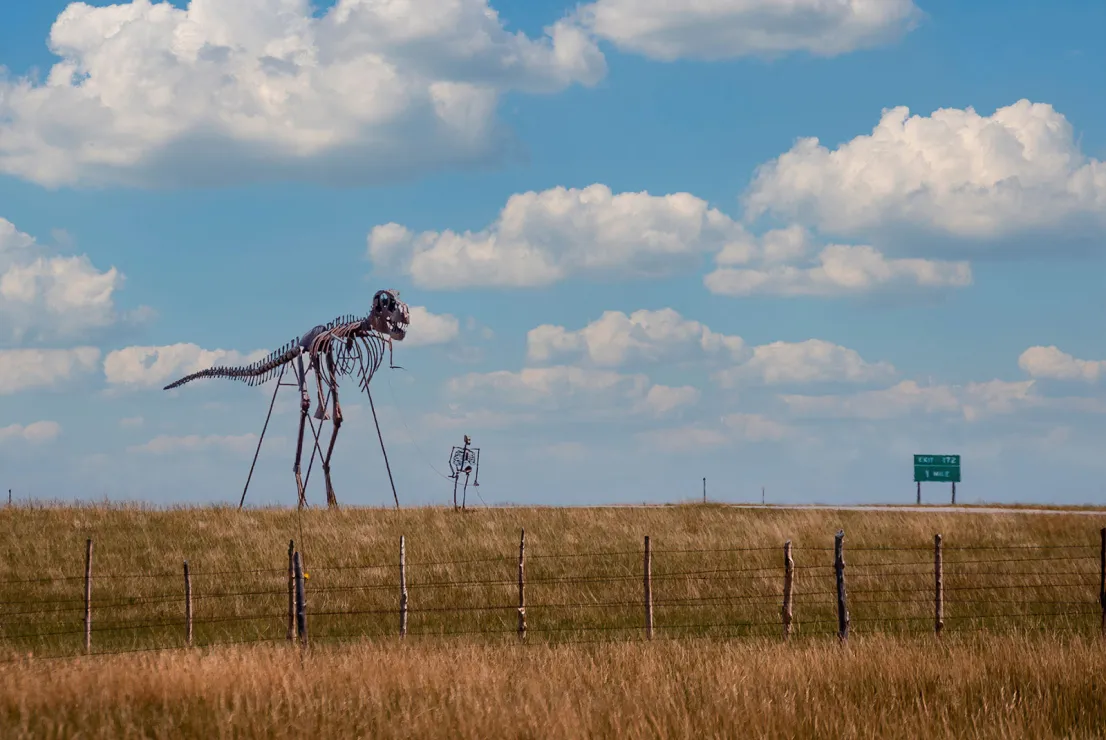
Skeleton Man and his pet live “between.” They’re in that hazy world between the place you left and the place you want to be. They are a part of the ride that you live through before you get to where you were really going.
There was a time when families used to leave home to vacation together in the ol’ family wagon (complete with wood side panels and painted in that hideous shade of Metallic Pea). The trip would take forever — but that was because everyone secretly knew that the trip itself was the destination.
There would be what felt like dozens of side trips to see the world’s biggest something. Eventually, there would be more souvenirs from the road than clothing in your luggage. And by the time you got to where you were supposedly going, it would almost be time to turn around and go back home.
Somewhere along the way all that changed, and the four-day drive turned into a four-hour flight. “Between” became “above,” and all the strangeness and frustration and wonder and beauty of those hours on the road was lost … but those forgotten places are still there. They’re still much the same as they were in their heyday and they’re still very much worth visiting.
Wandering off the beaten path
South Dakota is a large and wide-open state. There are only five states in the country in which fewer people live. That means there’s plenty of room for strangeness and shenanigans, of course!
So let’s just forget everything about all the touristy things you can see there for just a minute, and talk a little bit about that Skeleton Man. You can find him halfway between two towns that you’ve probably never heard of: Murdo and Kadoka. They are right alongside the biggest east-west route in the state. Skeleton Man is interesting all on his own to be sure, but he’s also interesting in that he appears to be walking toward one of the most fascinating little places in the entire state.
South Dakota is famous in part because most of Kevin Costner’s magnum opus, Dances With Wolves was filmed in various locations within its borders. There are a couple of places around the state that house movie memorabilia. But, the most unique by far is exactly the place toward which our skeletal friend and his prehistoric companion appear to be traveling.
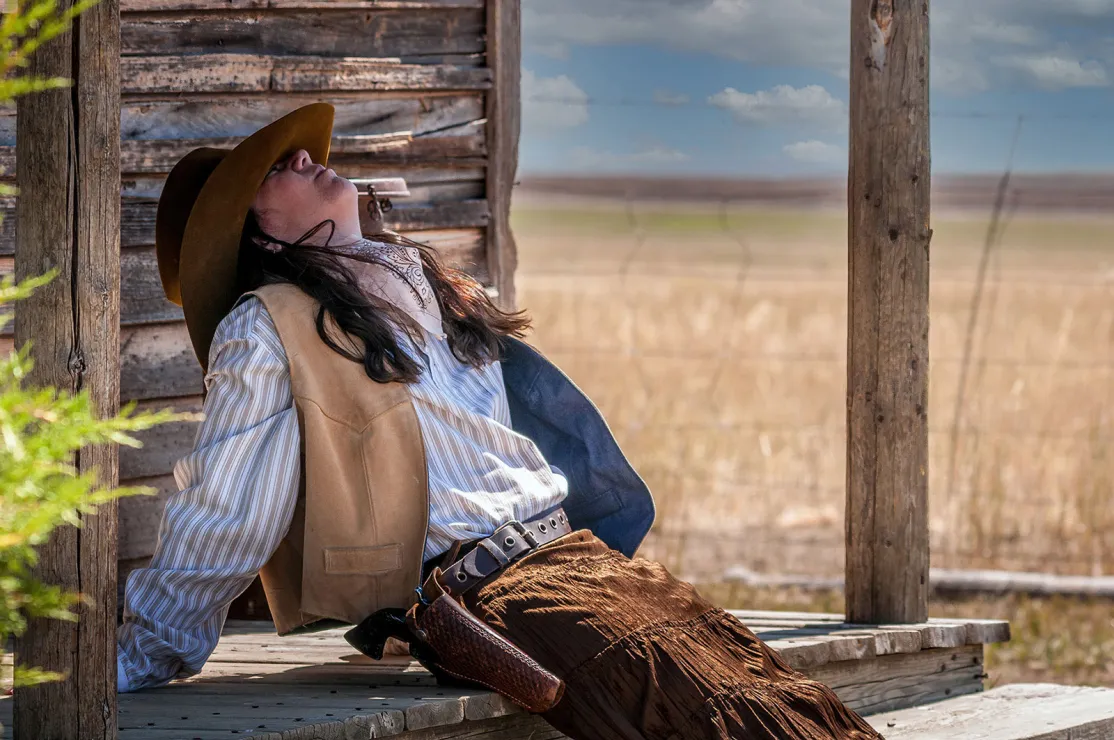
Check out the 1880 Town (population 170 ghosts, 9 cats, 3 dogs and 29,368,703,905 rabbits; visit the website at https://www.1880town.com). Aside from hosting a sizable collection of movie memorabilia in its main building, it is also a place where you can find 30 authentically furnished buildings dating from 1880 through to 1920. It really gets cool when you join in and become part of the show yourself. For a few dollars, you can mosey on down to the Longhorse Saloon. There, they’ll dress you up in period costume as a cowboy or a showgirl and turn you loose on the streets to wander around, whoop it up or just to relax on “your” front stoop.

More dancing, more wolves
When “Dances With Wolves” was filmed, the location team went to some great lengths to get out to some of the most untraveled places they could find. After all, there were no McDonald’s franchises and fewer major highways to be seen anywhere in the 1860s, so they had absolutely no place in this kind of period piece. In 1989, the place to really get away from it all turned out to be central South Dakota. Last time I checked, which was admittedly about five years ago or so, Google hadn't yet bothered to send Street View vehicles to map parts of this place.

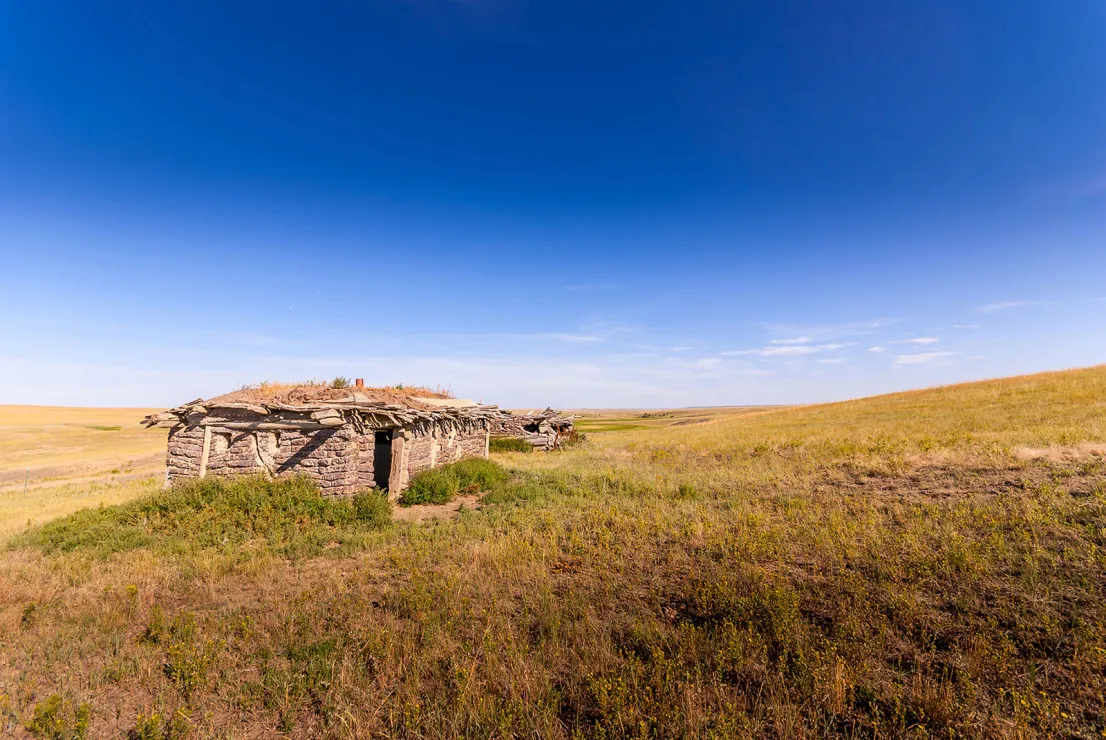
The “Fort Sedgwick” location from the film was built on the Triple U Buffalo Ranch in Stanley County where, at least at the time, the world’s largest herd of privately owned bison made their home. The area where filming took place is undeniably beautiful, but at the time of my visit, 20 years after the film had been shot there, it was almost impossible to tell that there was anything remotely interesting anywhere near the dirt driveway and the trailer/gift shop at the front of the property.
It was only when you walked to the back of the property and slipped through the gap in the fence that the stunning vistas opened up and allowed you to see almost clear to the edges of the earth. Interesting? I’m still not really sure. But wow! Those views!
Those stunning vistas and vast skies are part of the state’s persona, so it makes sense to find a way to really experience that aspect of its character. And it was fun to drive all the way out there to take it all in. Side note: this property was at that time owned by Ted Turner — yes, THAT Ted Turner — but the Fort Sedgwick tourist attraction is still there to be visited.
This is where things start to get corny
Fun fact: nearly one out of every three dollars generated by South Dakota agriculture starts in a cornfield. Can it be any surprise that the state is home to the legendary … Corn Palace (https://cornpalace.com)? YOU HEARD ME. Established — if you can believe it — in 1892, this remarkable landmark plays host to about half a million visitors from around the country annually. All this for corn!

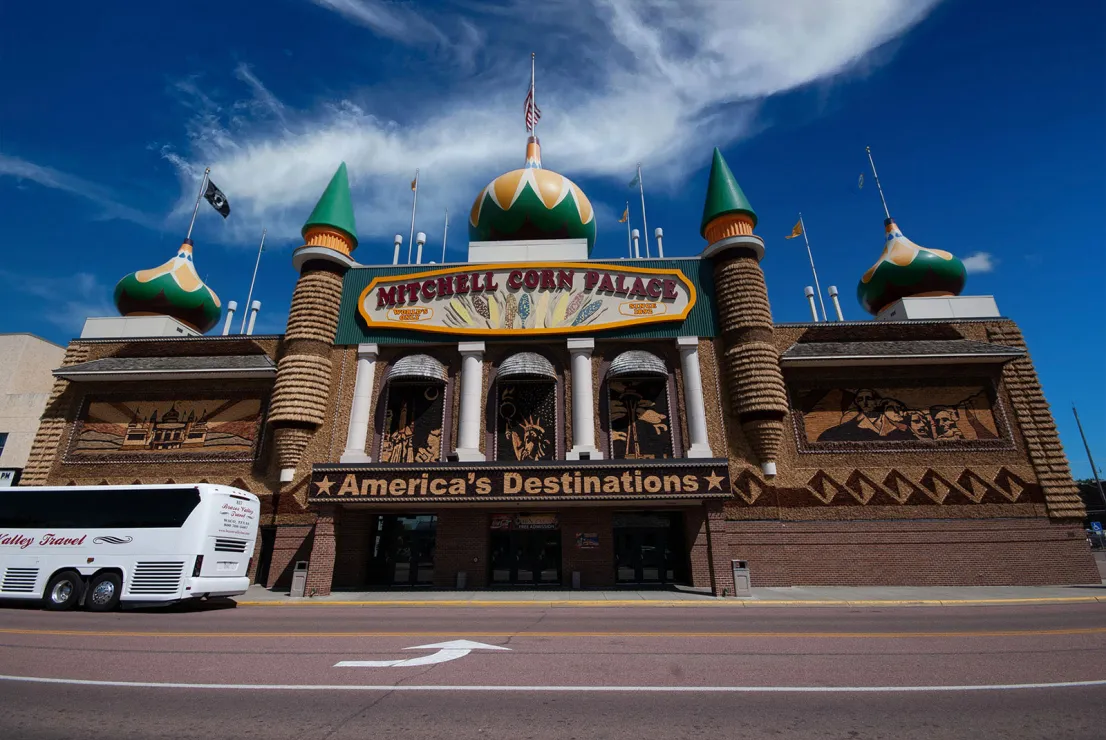
Although it’s mostly used as an event venue for festivals, farmers markets, circuses or any other affair that might be hosted in any other arena, the real highlight of any visit to this unique location will be the corn murals. Every year a different theme is chosen and the walls are decorated inside and out with corn, other grains and native grasses. This turns the structure into (and I quote) “the agricultural showplace of the world.”
Take the time to enjoy your visit (for free!) during the summer months. Go on a guided tour and learn all that there is to know about the Palace. Learn its story and get closer to South Dakota while you do it!
Now, here’s what you really came for
Wall Drug: famous throughout at least part of the continental Unites States and in select places in Canada and other countries, all because of the ice water. In 1931, just after the Great Depression, the little town of Wall, SD on the edge of the Badlands was known as the “geographical center of nowhere.” Wall Drug sprung up as a literal oasis for weary travelers going from this way to that with its promise of free ice water to anyone who cared to stop for a moment.
Truthfully, it was primarily a real apothecary-type drugstore, but the thing that really brought people in was those signs on the highway advertising free ice water. 326 people lived in that little town back in 1931 and nearly 100 years later the population has swelled to a massive total of about 800 year-round residents. They’re visited every year by up to two million people, some of whom are still looking for that free glass of ice water.

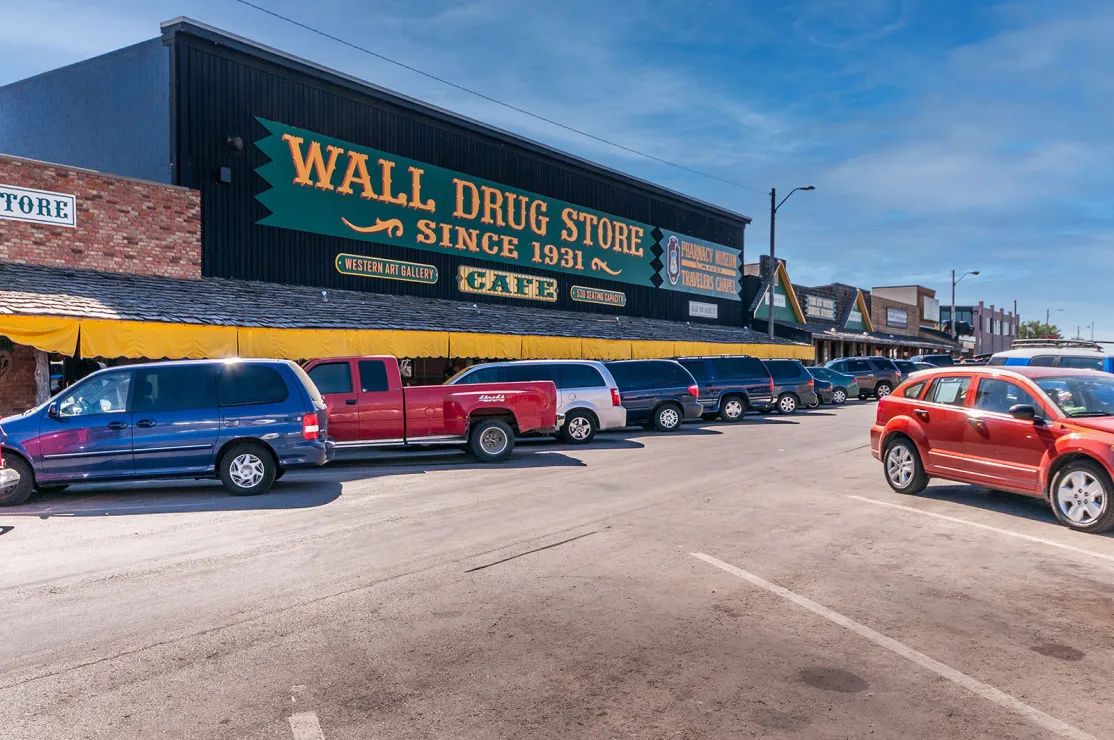
On a good day, you might find about twenty thousand people roaming around the complex of restaurants, gift stores, galleries and other amenities offered under its banner. But Wall Drug’s biggest treasures can be found in the backyard area. The 80-foot brachiosaur, the life-size T-Rex, the water show, the panning and mining experience and of course, the Giant Jackalope. The list is endless. Wall Drug is a must-see addition to any South Dakota visit itinerary.
There's more, you know
South Dakota is home to the largest number of bison anywhere in the United States, so it naturally follows that its state animal is … well, it’s the coyote. Even so, well over thirty thousand bison roam the state in herds owned publicly, privately, and tribally.
These animals are very, very easy to find. If you were to journey through the Black Hills or the Badlands, you’d be almost certain to find hundreds or even thousands of the creatures roaming public land.
A few things about bison: A mature male can weigh over 900 kilograms and stand close to two meters high at the shoulder. That translates to just about a ton of mass, over six feet high. They can move all that bulk as fast as 60 km/h (40 mph) and jump almost two meters vertically. They’re agile, dangerous, unpredictable murder machines and they should be given a wide, wide berth.
Close call...OOPS
The fact that I somehow — completely unintentionally — wound up within about two or three meters of one of these massive animals in Custer State Park was one incredibly lucky (and at the same time horrifyingly unlucky) moment. It was unlucky in the sense that I wasn’t able to avoid such a close encounter.
I was lucky because I managed to survive such a close encounter. At least I was able to get back into the car before recovering enough of my wits to actually take a photo.

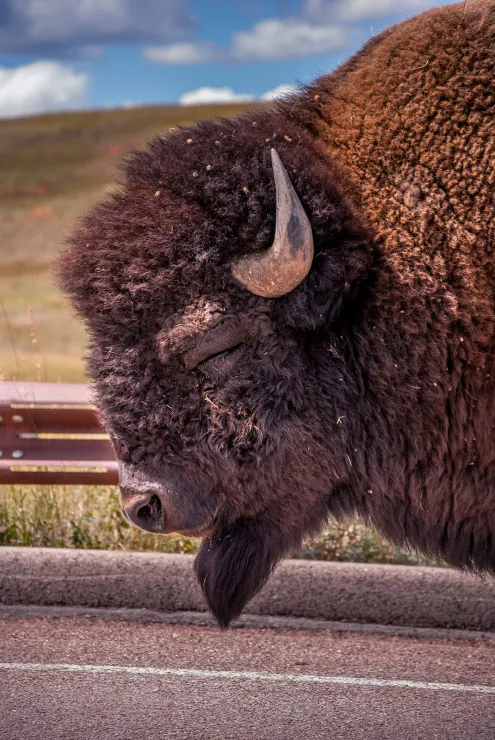
Even if you don’t find the bison (spoiler alert: You WILL find the bison), there’s still plenty to see in and around the Black Hills. Badlands National Park is directly east of those hills, and it’s full of sharply eroded buttes and pinnacles that provide a delight to the eye everywhere you can turn.

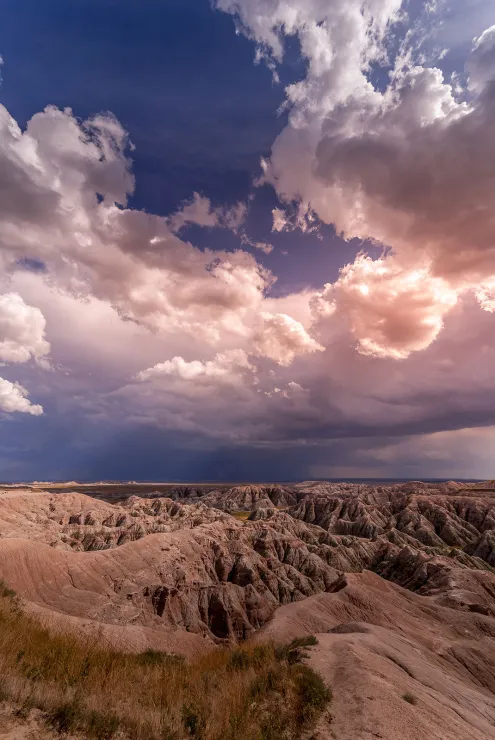
Natural forces such as shallow inland seas, rivers, and winds conspired to deposit hypnotic layers of variously colored rocks and minerals in the area. The winds and water stack the rocks onto themselves like some sort of geological layer cake.
The same rivers, along with wind and sand and other elements, are eroding these deposits at a rate of two to three centimeters (about an inch) a year. That is an astonishingly rapid rate of erosion for rocks. In comparison, the granite in the Black Hills is eroded at a rate 10,000 times more slowly.
So, if you want to see this landmark in all its glory, do not waste time. You’ve only got about 500,000 years left before the forces of nature wear the Badlands down to a nub.
Dead Presidents and Tribal Chiefs
We’ve taken a weird little journey away from a lot of the things that most tourists would probably put near the top of their “things to see and do” lists in this state. Let’s finish up in the Black Hills, with a couple of places that just about everyone makes a point of visiting.
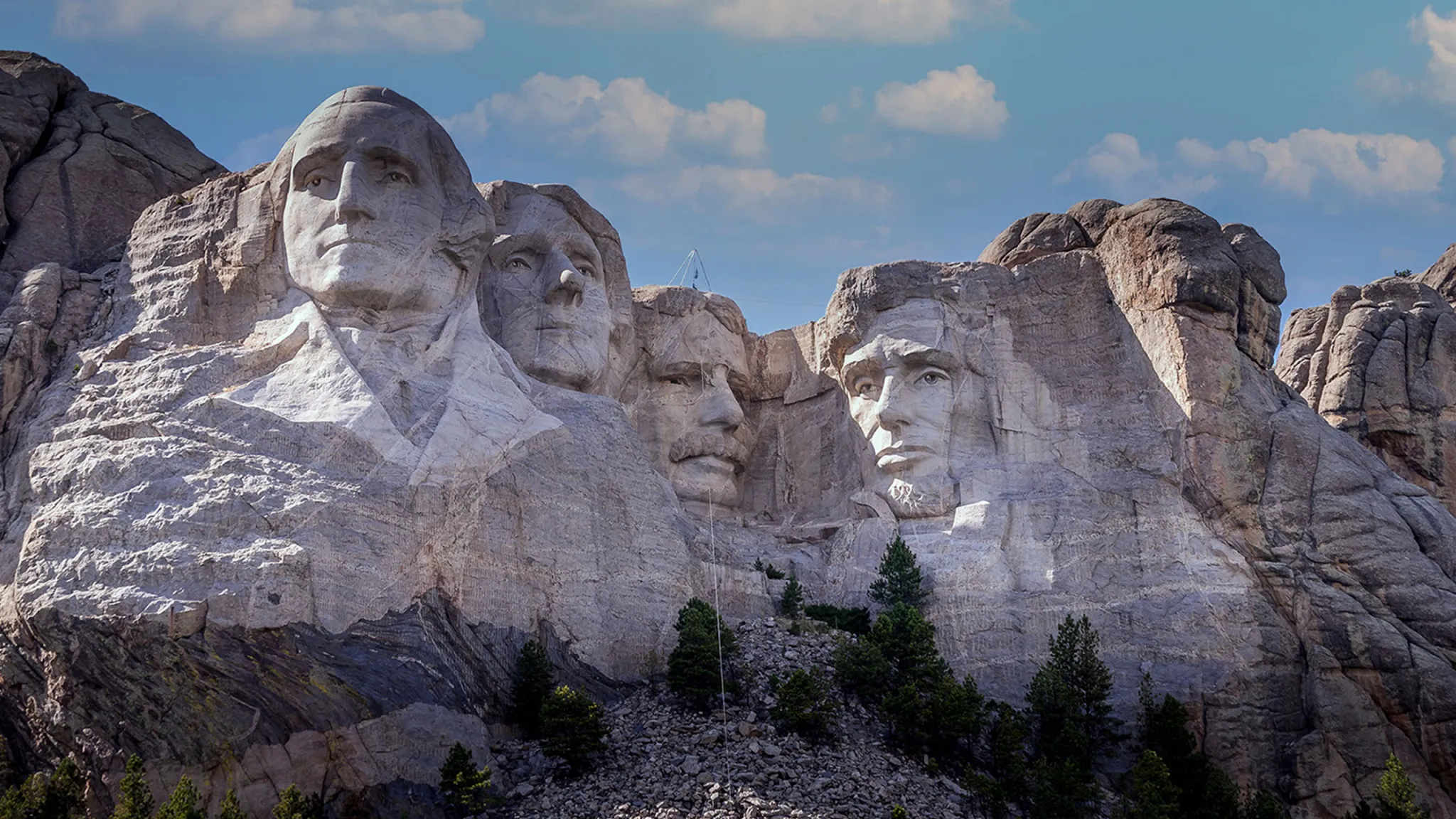
Gutzon Borglum was a problematic fellow, to say the least. He was deeply racist and had close ties to the Ku Klux Klan in the the 1920s. The project of carving massive heads into the granite of the Black Hills was born largely of his fascination with themes of supremely patriotic nationalism borne out on a gigantic scale.
The monument he chose to build was situated on land promised to the Lakota Sioux in the Treaty of Fort Laramie in 1868. But the government forced the tribe to relinquish their rights to the Black Hills portion of the area ceded to them, Coincidentally, this occurred shortly after gold was discovered in the area as white settlers streamed west to make and lose their fortunes. The conflict between the Lakota and the US government culminated in what came to be known as the Wounded Knee Massacre, 10 years before the end of the 19th century.
This was the atmosphere into which Borglum brought his massive ideas, his dynamite and his ambition. Twenty-five years after the horrors of Wounded Knee began the construction of Mount Rushmore. Historian Doane Robinson had originally thought to commemorate American heroes such as Lewis and Clark and Buffalo Bill Cody alongside Tsakaka-wias (known as Sacajawea) and Oglala Lakota leaders Maȟpíya Lúta (Red Cloud) and Tȟašúŋke Witkó (Crazy Horse). Borglum instead chose the four presidents that we see today. He had the idea that these men would be more broadly appealing to the tourists that they hoped would be drawn to the area.
Construction began in 1927 and the faces of Washington, Jefferson, Roosevelt and Lincoln (chosen to represent the nation’s birth, growth, development and preservation, respectively) were complete by 1941. The original plan called for each president to be depicted from head to waist, but lack of funding brought construction to a halt on Halloween of that year.

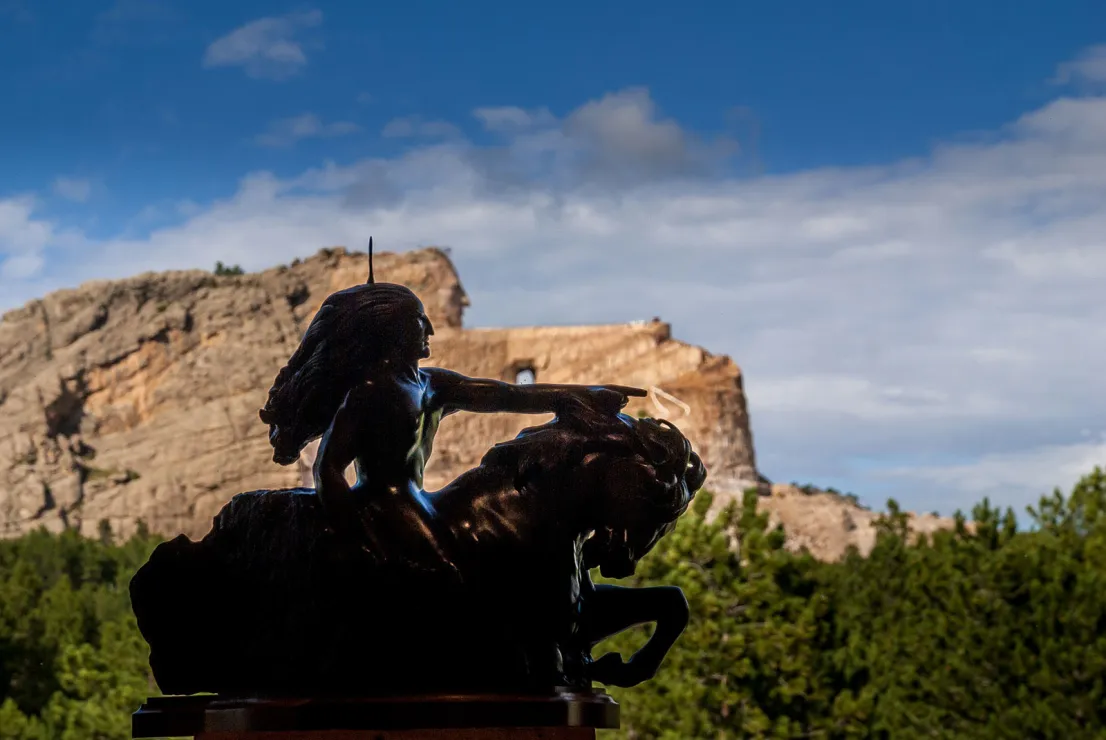
Roughly 20 miles from the Presidents, another massively scaled monument is being carved out of the granite. This one will depict Tȟašúŋke Witkó. He’s mounted on a horse and pointing a finger toward his tribe’s ancestral lands. Designed by Korczak Ziolkowski, the project was begun in 1948 and continues to this day. The memorial is a nonprofit undertaking and accepts no state or federal funding. Revenue from visitors’ centers, gift shops and private contributions provide the only financing for the project. The intent is that once the sculpture has been completed, it will become the focal point of an educational and cultural center that will include a campus of the University of South Dakota and the Indian Museum of North America.
The installation has not escaped controversy. Its location in the Black Hill, the sacred burial ground of the Lakota Sioux, has prompted traditionalists among the tribe to oppose the memorial as an affront to their culture and beliefs.

Pack your bags and head to South Dakota
South Dakota is a big place, and although it’s wide open and empty, we’ve really only begun to scratch the surface of the places to visit and the things to see in this state. Maybe it’s time to get back to traveling the way we used to. Hop in the car and get to know not only the places where you’re going but also the stops along the way.
There’s much that’s so easy to miss when you take the quick and easy way to get from point A to point B. All I know is that never being able to experience everything in between — or at least some of the things in between — would be a real shame.